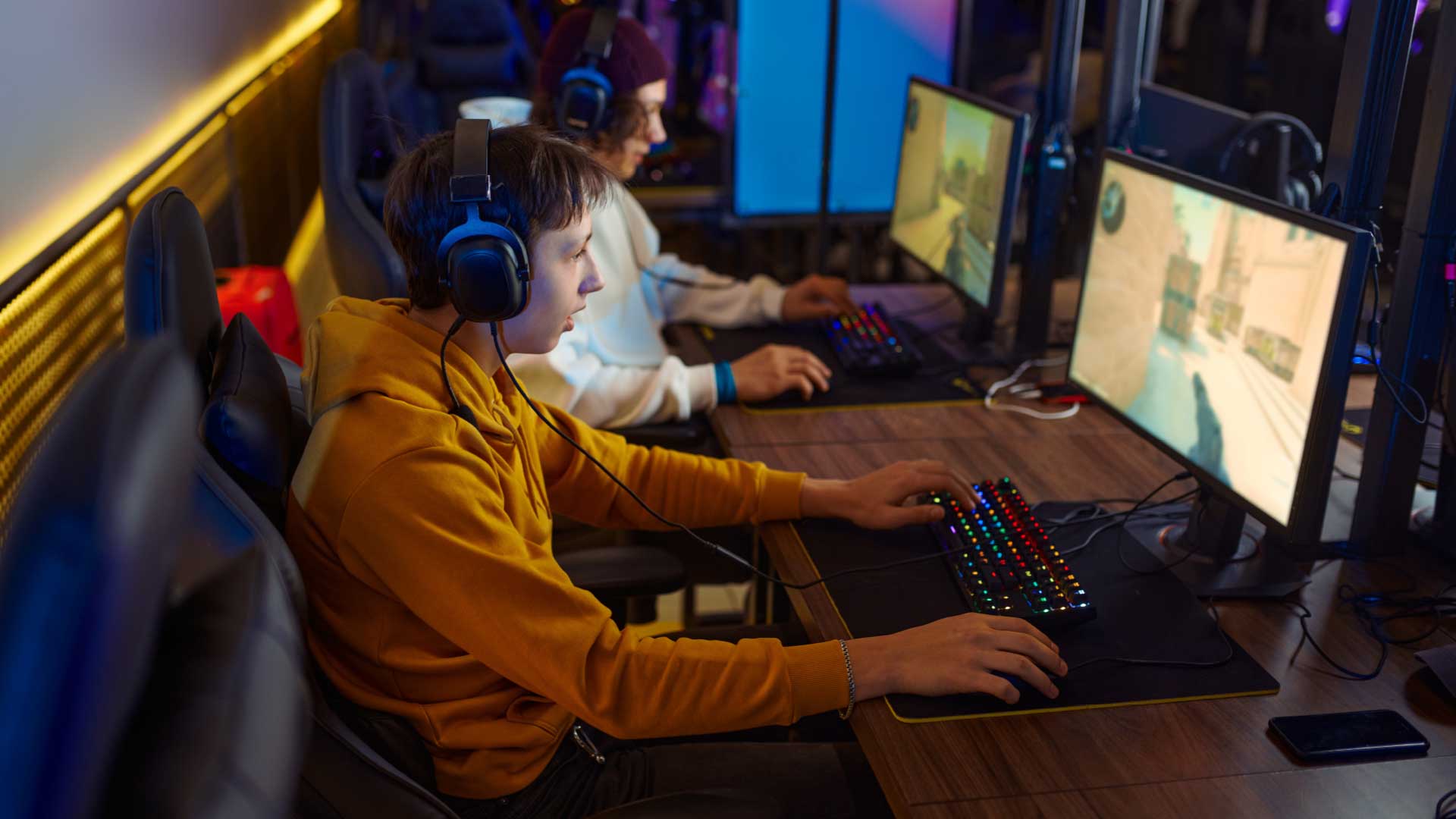
At first glance, Cottesmore School seems an unlikely champion for competitive gaming. With its wood-paneled halls, traditional uniforms, and deep-rooted boarding school heritage, it exemplifies centuries of British educational tradition. Yet this prestigious prep school has become a pioneer in educational esports, recently hosting what they believe to be the world’s first prep school-aged gaming championship. It’s just one example of how British educational institutions are discovering the unexpected power of competitive gaming as an enrichment tool.
“The story isn’t that we do esports,” Rogerson explains during the online panel, “it’s the fact that we do esports in this paradigm, in this setting.” As the head of a deeply traditional boarding school, Rogerson’s embrace of competitive gaming represents a broader transformation happening in educational institutions across the UK, where esports is evolving from an after-school distraction to a powerful educational catalyst.
The shift isn’t just aesthetic. At New College Swindon, Programme Leader Chris Baxter has built a comprehensive esports program that would have been unthinkable just five years ago. Students can now progress from entry-level qualifications through to Higher National Diplomas, spending up to five years developing skills that extend far beyond mastering game mechanics. “We’re seeing students use gaming as a springboard for developing transferable skills that benefit them across any industry,” Baxter notes, detailing how their dedicated esports room has become a hub for both competitive gaming and crucial skill development.
But the real revolution isn’t happening in the victories or the high-level plays – it’s in who’s showing up to play. Tyler Wilson, drawing from his experience at York College, has discovered that esports programs are reaching students who have historically struggled to engage with traditional enrichment activities. The data is striking: up to 75% of students with additional learning needs are more likely to engage in esports-based enrichment compared to traditional activities. “We’re seeing a completely different side to students who might have been labeled as challenging in traditional settings,” Wilson says. “It’s about meeting them where they are.”
The transformation extends beyond individual success stories. David Higginson, co-founder of DAIGON Esports, has observed gaming creating unexpected social bridges in schools. Students who might never interact in traditional settings are forming teams, developing strategies, and building friendships through shared digital experiences. It’s a phenomenon that’s catching the attention of educators who have long struggled to break down social barriers in their institutions.
Yet for all its success, esports in education still faces significant challenges. Despite statistics showing that women make up over 50% of global gamers, competitive educational esports programs show a marked gender disparity. At Cottesmore’s recent championship event, only a handful of girls participated among dozens of competitors. The disparity has prompted educators like Rogerson to launch dedicated initiatives aimed at creating more inclusive competitive environments.
The impact of these programs extends far beyond the screen. Chris Baxter shares how a partnership with a local Islamic school used esports access as a behavior modification tool, leading to measurable improvements in attendance and academic engagement. It’s this kind of concrete impact that’s helping to silence skeptics who question gaming’s place in education.
The business world is taking notice too. Major aerospace companies are now actively seeking graduates with esports experience, recognizing that these students develop unique problem-solving and team coordination skills that traditional education struggles to teach. It’s a trend that suggests the true value of educational esports might lie not in the games themselves, but in the cognitive and social skills they develop.
As more institutions adopt esports programs, they’re discovering that success lies not in replacing traditional activities but in creating new pathways for student engagement. Whether it’s building confidence in socially anxious students, developing communication skills in team environments, or creating new social connections, gaming is proving to be an unexpectedly powerful educational tool.
In Cottesmore’s great hall, as another round of competition begins, the contrast between old and new feels less jarring. Perhaps this is what educational evolution looks like: tradition and innovation finding common ground in unexpected places, one game at a time.