The unmistakable passion in Alexander “Cristal” Nathan’s voice cuts through the digital static as he describes a harsh reality: “You don’t survive with a disability unless you see the truth.” As founder of Permastunned Gaming—the world’s largest esports organization for people with disabilities—Nathan understands better than most how the gaming industry’s promise of inclusion often falls short of its potential.
A recent Esports Trade Association webinar brought together advocates, educators, and industry professionals to examine the complex landscape of disability inclusion in esports. The discussion, moderated by Nik Turner, revealed both systemic barriers and innovative solutions emerging across the competitive gaming ecosystem.
Lewis Body-Douglas discovered the power of adaptive gaming through painful personal experience. While working as a QA tester at Rockstar Games, he broke his hand and suddenly found himself unable to perform his job—or participate in his primary hobby. “I reached out to Special Effect,” Body-Douglas recalls, referring to the UK charity that provides gaming access to people with physical disabilities. “They sent me some adaptive gear, and I suddenly realized how isolating this could be if my life had been gaming and suddenly this was the case.”
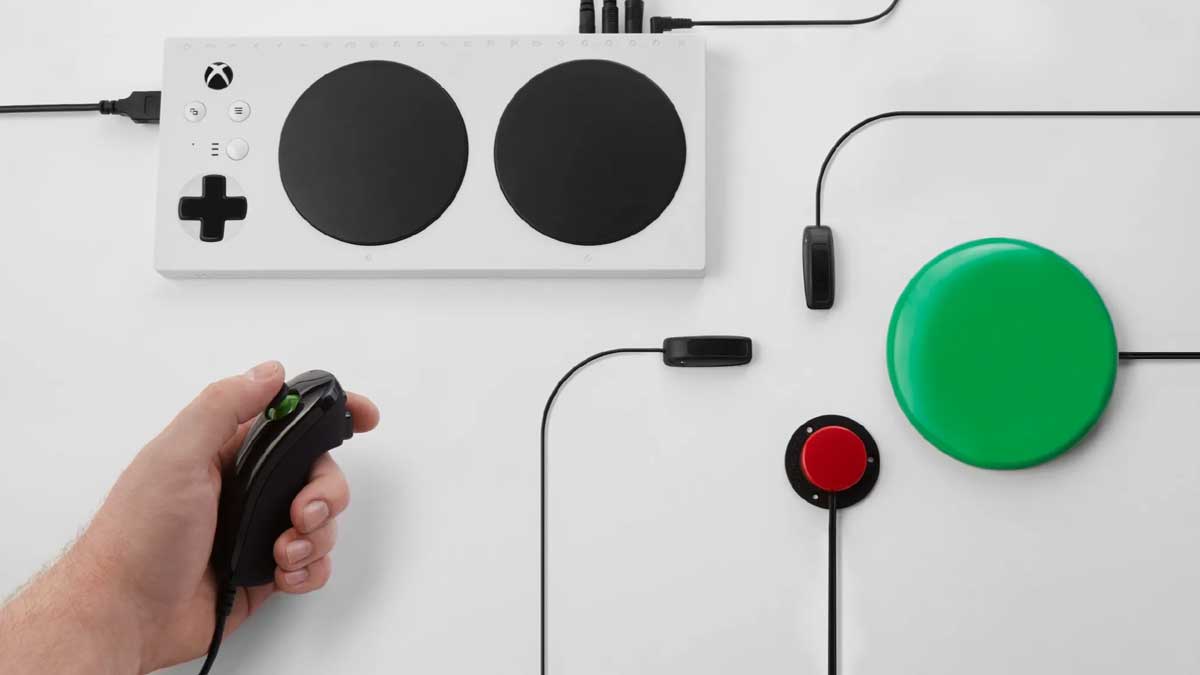
Body-Douglas’s temporary disability opened his eyes to what many face permanently. Special Effect’s work demonstrates how the right technology can level the playing field—quite literally. Eye-tracking systems originally designed for accessibility now help bedbound players control computers with the same precision as traditional keyboard-and-mouse users. What’s particularly striking is how major console manufacturers have embraced this market. Sony, PlayStation, and Nintendo now offer adaptive controllers available through mainstream retailers, signaling a shift from niche accommodation to market opportunity.
While physical disabilities often receive the most attention in accessibility discussions, Robbie Woolcock from Prestige Network highlighted challenges facing deaf and hard-of-hearing gamers. The lack of British Sign Language interpreters at gaming events creates immediate barriers, but the deeper issue runs to the specialized terminology that makes esports increasingly inaccessible. “There’s a linguistic barrier when teams import Korean players,” explains Nesli Deniz, Academic Director at Bahçeşehir University. “When they get upset, everyone turns to their mother tongue.” The solution isn’t just translation—it’s creating sustainable communication systems that work across cultural and ability lines.
The discussion also touched on sensory challenges affecting autistic gamers, who may struggle with the loud sounds and bright lights typical of major esports events. These examples illustrate how disability inclusion requires thinking beyond obvious accommodations to address the full spectrum of human neurodiversity.
The panelists emphasized how adaptive technology is transforming accessibility. Major console manufacturers like Sony, PlayStation, and Nintendo now offer adaptive controllers, while eye-tracking technology enables players with limited motor function to compete at high levels. Body-Douglas shared the inspiring example of a girl with cerebral palsy who used adaptive technology to design 3D characters—demonstrating skills that exceeded his own abilities as a games educator. The key insight is that technology designed for accessibility often benefits all players. As Body-Douglas noted, many accessibility features can improve gameplay experiences for everyone, not just those with disabilities.
A significant portion of the discussion centered on whether disabled players should compete in separate divisions or alongside non-disabled players. Nathan advocated for full inclusion while acknowledging current limitations: “Full inclusion should be the goal, but it’s probably not realistic right now.” The panelists suggested that classification systems similar to those used in Paralympics might be necessary as intermediate steps. Lewis highlighted successful examples like the Quad Gods, a team of power wheelchair users who have competed against and defeated non-disabled teams in various tournaments, proving that integration is possible when games don’t rely heavily on physical reaction times.
Moving beyond individual accommodations requires addressing what Nathan identifies as three critical pillars: game developers, hardware manufacturers, and society as a whole. Government recognition of esports as legitimate sport could unlock funding streams and remove bureaucratic barriers that currently limit disabled players’ access to necessary equipment. In the Netherlands, Nathan explains, disability benefit caps restrict savings to €2,000, potentially preventing players from acquiring gaming equipment. “Recognizing it as a sport could lift some of these restrictions,” he notes, allowing disabled individuals to participate meaningfully in competitive gaming.
The conversation revealed how organizational failures compound these systemic issues. Woolcock emphasized that accessibility is often treated as an afterthought rather than core production element: “We often see interpreting or accessibility being added as an afterthought for these gaming events, not part of the initial planning.” This approach creates cascading problems: last-minute interpreter bookings, inadequate technical setups, and mismatched expertise that makes support feel disconnected from the actual gaming experience.
Megan Van Petten, founder of the Esports Trade Association, provided perhaps the most powerful framing of the entire discussion. “Inclusion is an act of love,” she explained. “When we choose to include others across different abilities, race, gender, culture, background, identity—we’re saying you belong here, you matter, and you’re worthy.” This perspective shifts the conversation from compliance-driven accommodation to value-driven community building. Rather than viewing accessibility as a burden or legal requirement, Van Petten’s framework positions inclusion as fundamental to esports’ identity as a global, digital-native community.
The webinar underscored that building truly inclusive esports ecosystems isn’t just about fairness—it’s about unlocking potential that’s been systematically excluded from competitive gaming. For an industry built on innovation and technological advancement, the path forward requires not just better tools, but better thinking about who gets to play.