For twenty years, a brand in gaming meant a logo you paid to put in front of people. Now the smartest money is chasing something harder to buy — a genuine place inside the culture. But as brands race to go “beyond the logo,” the biggest player in the room is betting billions that old-fashioned advertising, dropped straight into the game, will out-earn all of it. Inside what a brand is really paying for when it enters gaming.
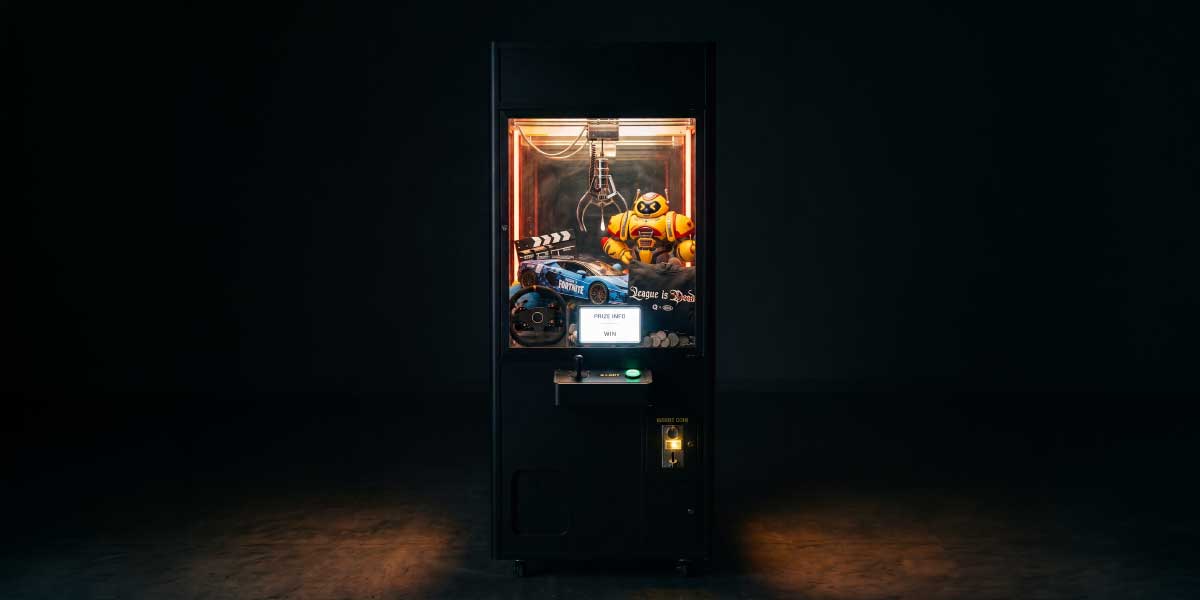
In the days before DreamHack Atlanta opened this May, two Lamborghini Temerarios appeared at landmarks around the city — one wrapped in a livery called “Play Louder,” the other in a Fortnite-built skin named “Fast ForWorld.” They were not there to be admired behind a velvet rope. Walk up to one and you could pick up a tablet, play a dedicated Lamborghini Fortnite island right there on the sidewalk, and win festival tickets by doing it. A hundred-thousand-dollar supercar, reduced — or promoted — to a way into a video game.
Lamborghini had just posted the most profitable year in its sixty-year history. It did not need to move inventory. What a record balance sheet cannot buy is relevance with a generation that doesn’t watch television, doesn’t read car magazines, and doesn’t care that a V12 once meant something close to sacred. So the marque went where that generation actually gathers, and it went in a way that tells you the whole game has changed. Its deal with ESL FACEIT Group, announced May 12, makes Lamborghini the official automotive partner of DreamHack festivals across the US and Europe through 2028. And the word the organizer used to describe it is the tell. Lamborghini, ESL said, is “not just a partner, but a key enabler in elevating the experience.”
Not a sponsor. An enabler. That single swapped word is the front line of a quiet civil war running through gaming right now — a fight over what, exactly, a brand is paying for when it shows up.
Nobody Buys a Logo Anymore
For twenty years, the answer was easy, and it was a logo. On a jersey, on a broadcast bug, on a step-and-repeat backdrop nobody looked at twice. You paid money, you got attention, and everyone counted it in impressions. It was advertising, and it behaved like advertising.
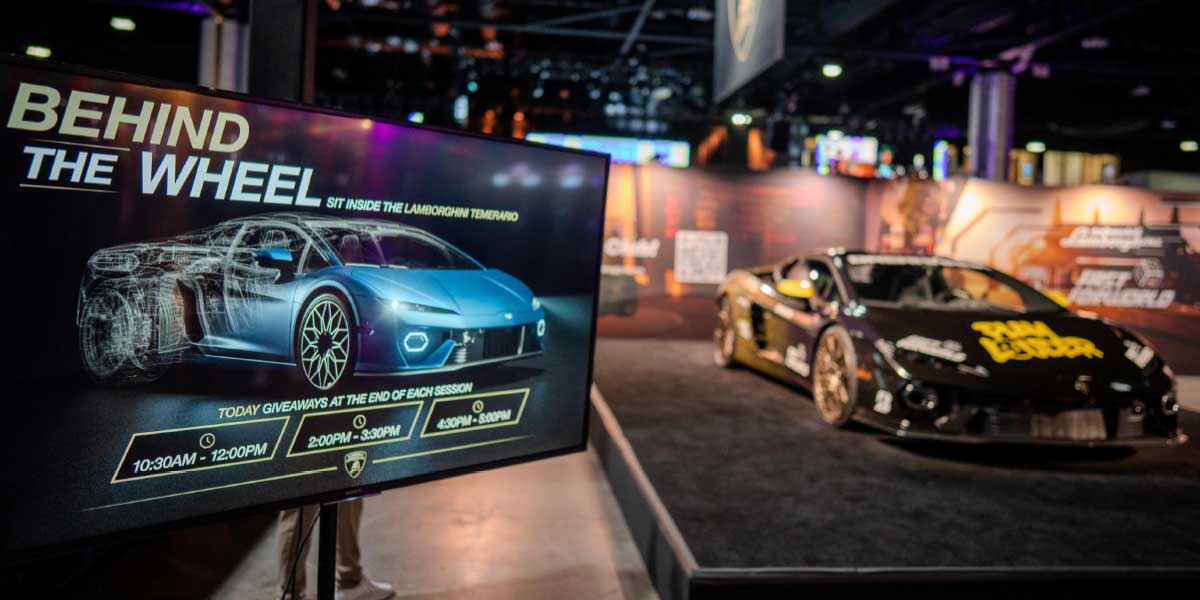
What Lamborghini bought in Atlanta is not that. The Temerarios that drew crowds downtown moved inside the festival and anchored the Creator Hub, flanked by Vesaro x Lamborghini driving simulators and a walkthrough of Fast ForWorld, the brand’s official gaming universe. A racing fan wants to sit in that simulator whether or not there’s a badge on the wall. That’s the difference between the old model and the new one, and it’s the difference the entire industry is now organized around: a logo interrupts your experience; the new activation is your experience.
The tell that Lamborghini understands this is that it refused to arrive all at once. It ran pilots at DreamHack Dallas and Stockholm in 2025 — premiering the simulators and a festival-liveried Revuelto, its V12 hybrid — watched whether a gaming crowd actually wanted premium automotive content, and only then signed through 2028. Test, prove, commit. It’s the opposite of the one-off stunt that treats gaming as a switch to flip during a campaign, and it’s why the deal reads as earned rather than bought.
The Test Everything Now Has to Pass
There’s a single question that separates the brands winning this game from the ones about to get laughed out of the server, and every organizer in the space knows it: take the brand out of the activation entirely, and ask whether anything’s left that a fan would still want.
Pass it, and you’ve made something. Fail it, and you’ve made an ad wearing a costume — which a gaming audience, the most brand-literate audience alive, will diagnose before you’ve finished your pitch.
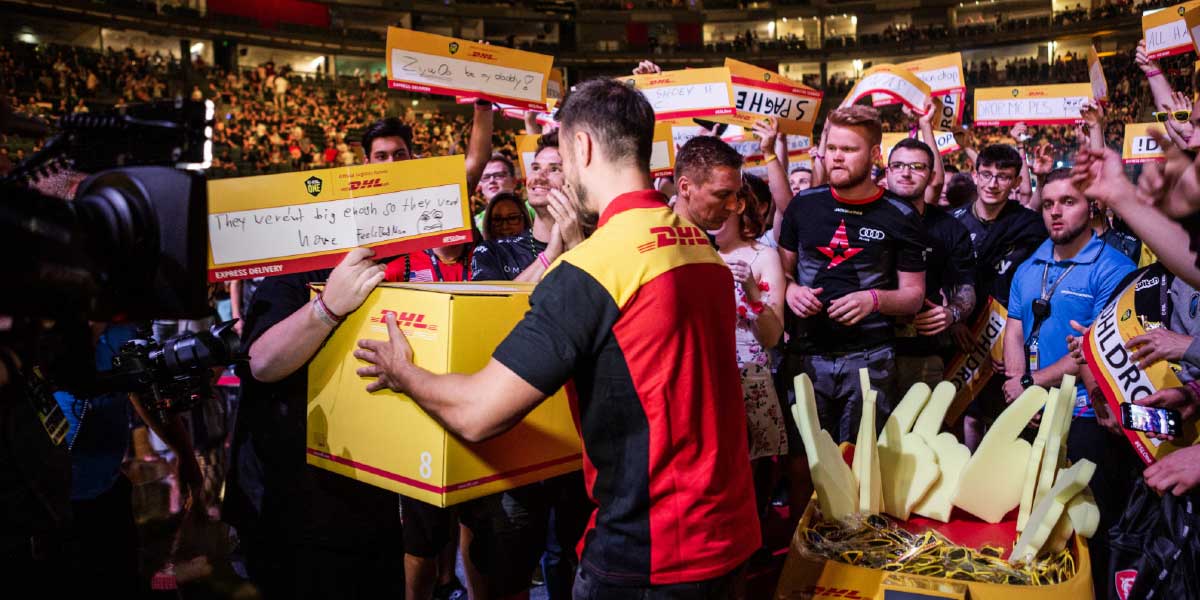
Lamborghini’s driving simulator passes; the racing fan wants the seat regardless of the badge. And so does the strangest success story in the business, which belongs to a company that ships your Amazon returns. DHL has partnered with ESL FACEIT Group since 2018, and somewhere in those years it stopped being the boring logistics sponsor and became a character. Its current flagship is The Dispatch — an actual scripted workplace comedy, now in its second season, about a dysfunctional crew running a forgotten “DHL Esports Logistics Division,” with episode titles like “AI is ruining esports” and a running plot about a rogue AI assistant. It is a sitcom. Made by a parcel company. That people watch on purpose. Around it orbits the rest of a small universe: Cargo, a seven-and-a-half-foot mascot with animated eyes and big-rig tires who tours championships handing out giveaways; EffiBOT, a DHL warehouse robot inserted into Dota 2 to ferry gear to players mid-match; the !DHL Drop, where fans who correctly call matches win flights and hotels to the finals. The real logistics work is there too — DHL trucks the stages and broadcast rigs — but the affection comes from the invented stuff, the things people wanted whether or not they ship with DHL. The payoff is a thing that should not be possible: at live events, thousands of fans chant “DHL” like it’s a striker’s name. A company that moves boxes turned its own logo into something people cheer.
But here’s the part that should make every CMO sit up, because it quietly solves the problem the rest of this business keeps dodging. DHL isn’t in gaming to sell shipping. It’s there to hire — young professionals don’t picture a logistics giant as a place to write code or run data science, and esports is where those people are. So the whole comedic apparatus funnels somewhere concrete: inside The Dispatch, warehouse and courier and IT roles get reframed as gamer archetypes — “Rush B,” “Build the Engine,” “Instant XP Boost” — each wired to a live job posting. And unlike affection, this converts. DHL’s esports employer-branding push drew nearly 200,000 visits, more than 80,000 job views, and over 10,000 applications across two years. That is a number you can take to a board. It is also, pointedly, the number almost no one else in this story can produce.
Take DHL out of any of it and the sitcom is still funny, the giveaway is still a giveaway. That’s why it works.
When the Brand Becomes the Reason You Showed Up
Climb high enough and the brand stops being a thing you notice at the event and becomes the thing that made you come.
G2 Esports plays this like a fashion house. More than 40 million fans, a Berlin org that spent its tenth-anniversary year treating collaborations as cultural statements rather than merch runs: a POLO x G2 crest co-designed with Ralph Lauren, a Warner Bros. Batman drop, a run with the label Smiley, and its first anime capsule — a five-piece Solo Leveling streetwear collection priced around €50 to €80, built on hero Sung Jin-Woo’s “zero to hero” arc, which G2 frames as a mirror of its own rise from nobody to contender. “This is more than a fashion drop,” COO Sabrina Ratih said. “It’s a statement of where gaming, anime, and street culture are headed.” The clothes are almost incidental. The claim underneath them — we decide what’s cool next — is the actual product.
Sony reaches for the same altitude from the opposite direction, through story. Esports World Cup: Level Up, produced by This Machine — the Sony Pictures Television studio run by Emmy winner R.J. Cutler, the filmmaker behind acclaimed docs on Billie Eilish and Martha Stewart — released its second season on Prime Video across more than 240 countries on June 26, all five episodes at once. Shot in the same vérité style Cutler brings to pop stars, it trades headshots for humanity: a smack-talking Warzone player from Oakland outrunning his past, the CEO of a Ukrainian org competing for a war-torn homeland, a coach turning a brutal childhood into his team’s shot at redemption. Pitched openly as a Drive to Survive for gaming, its genius is that it reaches people who will never watch a match but will absolutely watch a story about sacrifice — and every one of them presses play voluntarily. When Hideo Kojima turned up at the Esports World Cup Festival for a Death Stranding 2 signing, he wasn’t interrupting anyone’s day. He was the reason some of them bought the ticket.
Most of it can’t be measured the way advertising is measured. There is no conversion rate on affection — which is exactly the work “enabler” is doing when ESL reaches for it. Call Lamborghini a sponsor and someone eventually asks how many cars the festival sold; call it an enabler of experience and the question quietly disappears. It’s clever, and it’s also a dodge. Which is what makes DHL’s 10,000 applications so quietly radical: it found a piece of this that does convert and pointed the whole activation at it. The lesson isn’t that everyone should be recruiting. It’s that the brands doing this well decide what “worked” will look like before they sign — a number, a pipeline, something — instead of accepting atmosphere as the deliverable and hoping the board doesn’t ask.
The Biggest Player in the Room Bet the Other Way
And then, six weeks after Lamborghini’s deal, the largest company in gaming did something that makes a mockery of the entire beyond-logos gospel.
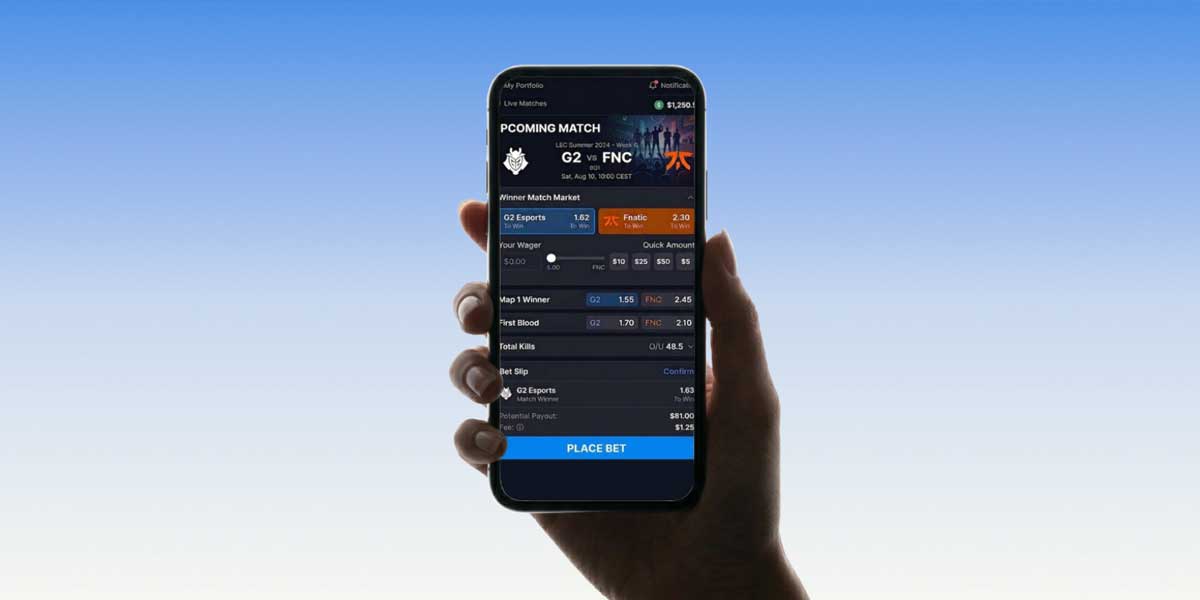
On June 15, Electronic Arts launched EA Advertising — a platform engineered to drop real-world brands directly into Madden, EA Sports FC, NHL, Skate, The Sims. Not experience. Advertising, integrated into gameplay, sold at a scale no festival activation can approach. The pitch is pure arithmetic: by EA’s own count, players finish more than a billion EA Sports FC matches a month and play the equivalent of 23,000 NFL seasons a day in Madden. “Players come to EA’s games and live experiences every day to play, watch, create and connect,” said David Tinson, EA’s Chief Experiences Officer. The engagement, EA argues, is the inventory. It was always there. The company is just selling it now.
Ads in games aren’t new — EA slapped billboards into Need for Speed: Underground 2 back in 2004. What’s new is the intent to build a durable business around them, and the reason is money. The $70-a-game model has been creaking under development costs that keep climbing, and advertising has gone from nice-to-have to must-have. So EA built its own ad server rather than rent one off the shelf, tailoring formats game by game — the whole apparatus a bet that in-game advertising is about to become the next major ad medium after social, connected TV, and retail. The prize it’s actually reaching for is CTV’s budget: US in-game ad spend is forecast to hit $9.21 billion by the end of 2026, per eMarketer, and EA’s argument is that a player leaning into a match is worth more than a viewer half-watching a show between phone glances. “The audience is much more interactive,” EA advertising VP Alex Dao told Digiday. “CTV, it’s a bit more passive.” In other words: gaming doesn’t just deserve a slice of the ad economy. It deserves the premium one.
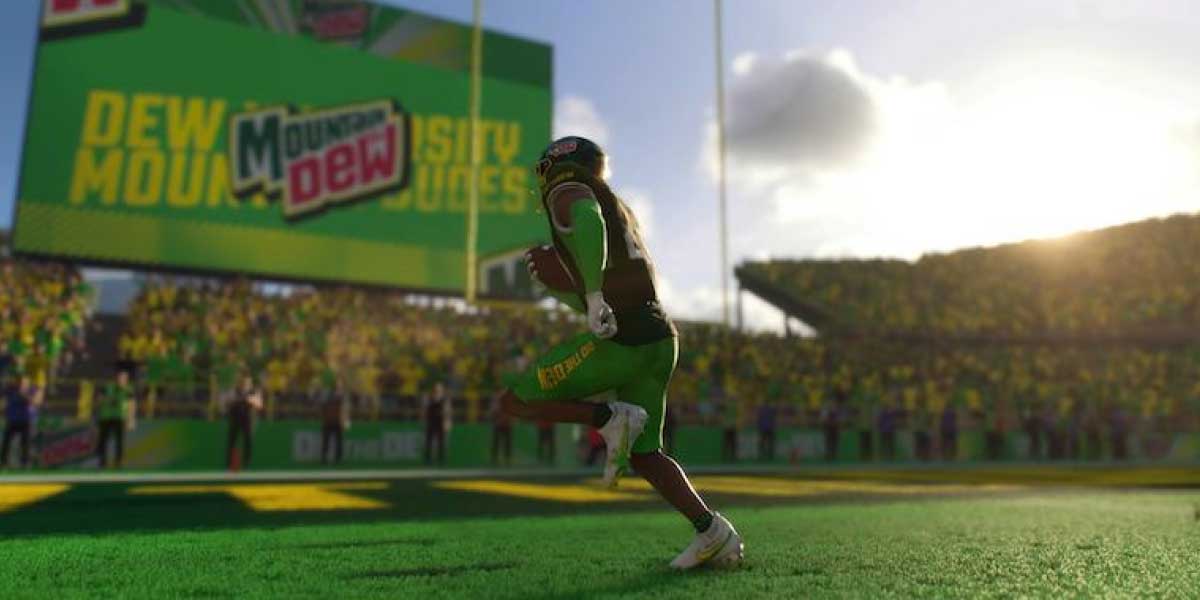
The early campaigns hint at what that looks like in practice: a Mountain Dew playable stadium in EA Sports College Football 26, Visa branding in EA Sports FC, and a Lowe’s-sponsored “Stadium Pulse” in college football that Dao says drew more than a billion impressions. But the sharper move is what EA wants to do next, and it aims straight at the objection this whole piece keeps raising. Retrofitting ads into an existing game is clumsy, Dao told The Game Business Show; the real opportunity is designing new titles — especially free-to-play ones like EA’s Skate — with the advertising built in from the start, so it “makes it feel more native.” Read that carefully, because it’s the most important sentence EA has said out loud. The live-events crowd’s whole test is take the brand out and see what’s left. EA’s answer is to build games where the brand was never separable in the first place. You can’t subtract what the thing was designed around.
So which is the future — the enabler-of-experience faith preached on the live-event floors, or the advertising-at-scale machine EA switched on in June? Almost certainly both, serving different masters. The experiential model manufactures meaning; the in-game model delivers reach, and a brand may need both the way a film needs a premiere and a billboard. But it’s worth saying plainly that “beyond logos” is partly true and partly a flattering story the live-events crowd tells about itself — and EA, holding more data on how players actually behave than anyone else in the argument, is betting the flattering story is wrong.
Here’s the catch that will decide it, and the tell is that EA sees it too. The take-off-the-brand test doesn’t politely stop at the arena doors. It follows you into the match, where it arguably bites harder, because nobody launched a game of Madden hoping to see a commercial. A fan who bought a festival ticket chose the experience. A player who queued a match did not choose the ad. Dao, speaking to Digiday, admits players are already vocal about seeing them, and that turning on the third-party demand spigot — the Trade Desks and Criteos of the world — before the experience is right could kill the business before it’s properly running. “We’re not working with those partners yet,” he says. That “yet” is doing a lot of work. It’s the same brand-literacy problem the live-events crowd obsesses over, just relocated to a place where the audience can’t walk away from the booth. EA’s bet is that at a billion matches a month, it won’t matter. The live-events world is betting it will.
Which Way In
Strip everything else away and the whole fight comes down to one honest question a brand has to answer before it spends a dollar in gaming: are you trying to mean something, or trying to be seen?
If it’s meaning — a relationship a rival can’t simply outbid — the experiential road is the only one that gets you there, and it charges in a currency most brands hate paying: patience, cultural fluency, and the nerve to be judged by whether your activation survives the removal of your own logo. If it’s reach, the machine EA just built is probably the more efficient buy, and calling it “experience” fools no one, least of all a nineteen-year-old who has watched every brand alive try to talk like a friend.
Lamborghini drove two supercars through Atlanta and let strangers play a video game on the hood. EA quietly turned a billion monthly matches into ad space. Both are betting on the same audience. Only one of them is trying to be loved. The brands that win the next decade of gaming will be the ones clear-eyed enough to know which bet they’re actually placing — and to stop pretending it’s the other one.