Esports has always attracted bold ideas. But the organizations and individuals being recognized by the 2026 ESTA Esports Industry Awards represent something more than ambition — they represent execution. From a publicly traded gaming media company rewriting the rules of esports business to a grassroots community architect transforming an entire state, this year’s class of winners has done the hard work of building something real, scalable, and genuinely meaningful.
The Blueprint for a Profitable Esports Business Is Here – and Its Publicly Traded
Esports Innovation Award
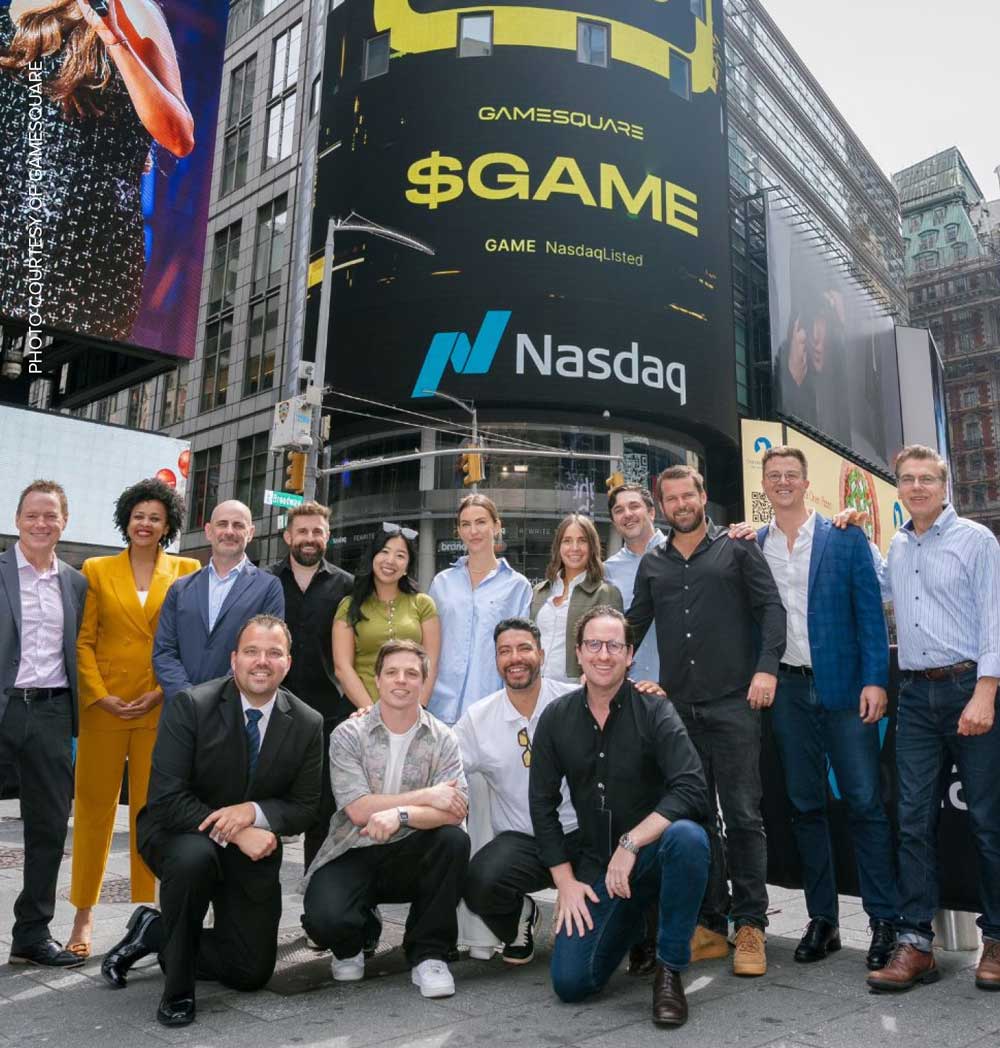 GameSquare has done something the esports industry has been chasing for years: it built a business model that works.
When GameSquare acquired FaZe Clan in March 2024 for approximately $14 million in stock, it inherited one of esports’ most iconic — and complicated — brands. What came next was a masterclass in strategic clarity. Rather than absorbing FaZe wholesale, GameSquare split the organization in two: FaZe Media, the creator-led IP company, was returned to its founders and eventually divested at a valuation of $39.2 million. FaZe Esports, the competitive organization, was retained at 100% ownership — and subsequently achieved operating profitability.
The numbers tell the story plainly. In Q4 2025, GameSquare hit a milestone it had been building toward — posting its first-ever quarter of operating profitability, while revenue more than doubled year-over-year to $18.5 million. More telling than the top line is what happened to margins: gross margin expanded from 25.8% to 45.9% in a single year — the kind of leap that signals a business isn’t just growing, but maturing. That maturity reflects something deliberate about how GameSquare has positioned itself: not as an esports company, but as a next-generation media company sitting at the intersection of gaming, creators, and culture. The Q1 2026 acquisition of TubeBuddy — an AI-powered platform that has helped over 10 million creators grow their YouTube channels — extends that vision further, adding creator tools and first-party data to a platform that already includes Stream Hatchet’s analytics (which tracks 36.4 billion hours of content annually and serves as the Official Data and Insights Partner for the Esports World Cup), FaZe Esports’ competitive brand, and an integrated agency operation. The company is projecting $85–$90 million in revenue for 2026, with the margins and momentum to back it up.
The experiential dimension comes through the Legends Cup — built in partnership with Barnes & Noble College across 1,100 campus locations — embedding FaZe’s cultural brand equity into physical campus environments at a scale no other organization has attempted.
GameSquare trades on NASDAQ under the ticker GAME, making it one of the very few esports companies subject to public market disclosure requirements and shareholder accountability. For an industry hungry for credibility and commercial durability, that transparency is not a technicality. It is a statement of intent.
One Search. One Gap. An Entire Ecosystem Built to Fill It.
Esports Leadership Award
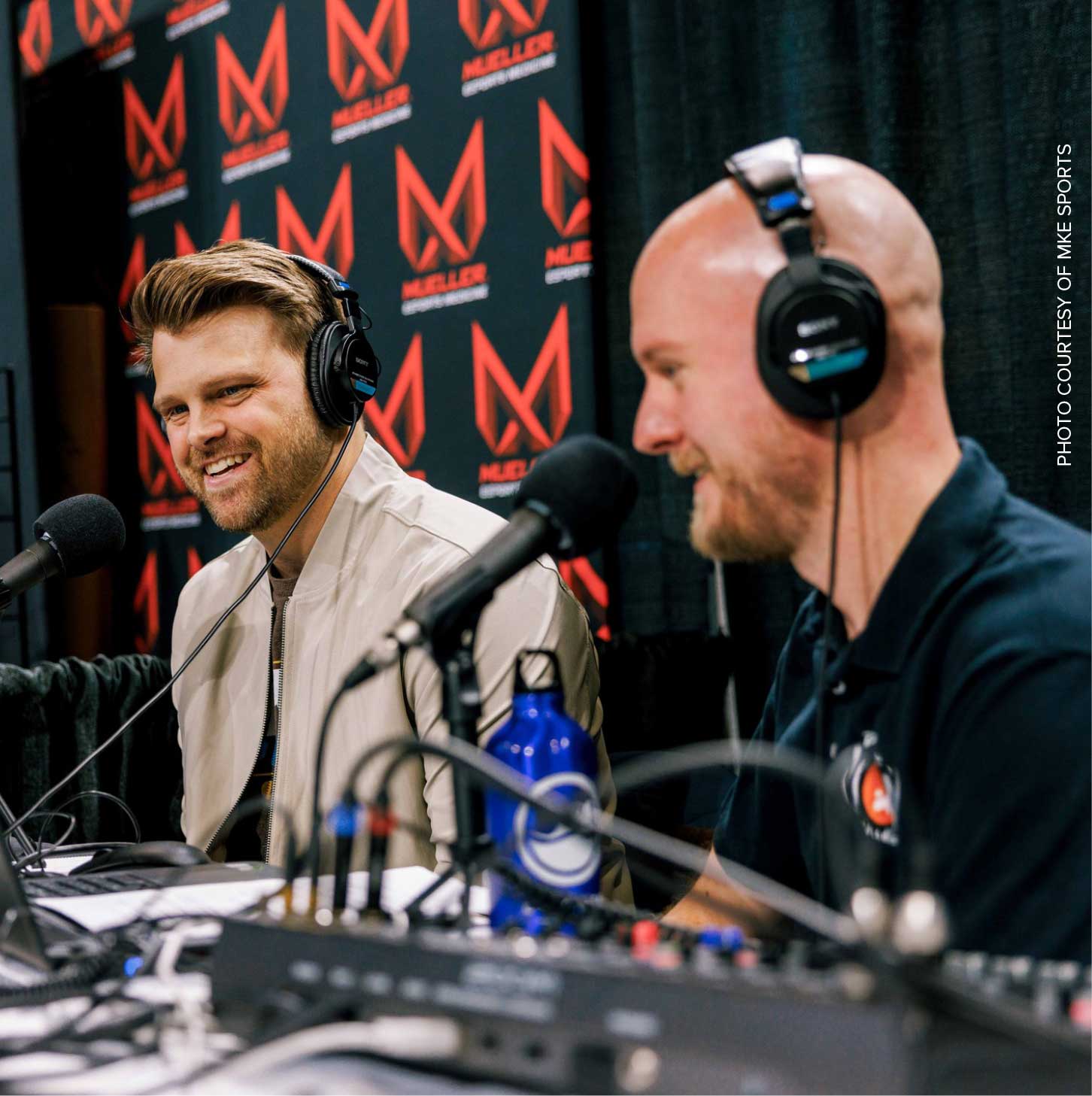 In 2020, Brandon Tschacher searched “Milwaukee esports,” found almost nothing, and decided that was a problem worth solving. What he has built since is one of the most organically successful regional esports ecosystems in the country — and a model that community builders everywhere should be studying.
The Milwaukee Esports Alliance, the Wisconsin Esports Summit, Cream City Convergence, and the state’s first collegiate esports conference are the headline accomplishments. But what makes Tschacher’s approach distinctive is how he built them: through coalition-building, shared infrastructure, and the deeply unglamorous work of showing up for the community year after year — without venture capital, without exclusivity deals, and without the short-term thinking that can hollow out community initiatives before they take root.
The numbers reflect the momentum. The Wisconsin Esports Summit, now in its fourth year, drew over 400 attendees in 2024 from Illinois, Michigan, Minnesota, and beyond. Cream City Convergence returned for its third year in 2025 at the newly expanded Baird Center — a $456 million venue transformation — drawing participants from 35 states and seven countries. The Wisconsin Esports Conference, launched in Fall 2024, gave the state’s collegiate programs their first dedicated in-state competitive home.
Beyond the marquee moments, Tschacher built something more durable: community infrastructure. A partnership with New Horizons of Wisconsin created an esports and IT workforce development badge program with 28 graduates holding employer-recognized credentials. A collaboration with Milwaukee Public Schools and the City of Milwaukee brought esports career programming to 300 youth through Camp RISE. Esports programming launched inside Discovery World, the city’s science and technology museum.
In 2026, the Milwaukee Business Journal named Tschacher a Power Player. He also co-published a peer-reviewed paper on esports sustainability in the Journal of Electronic Gaming and Esports. The recognition is well-earned — and long overdue.
38,000 Fans. Five Countries. One Championship That Felt Like Home.
Esports Community Engagement Award
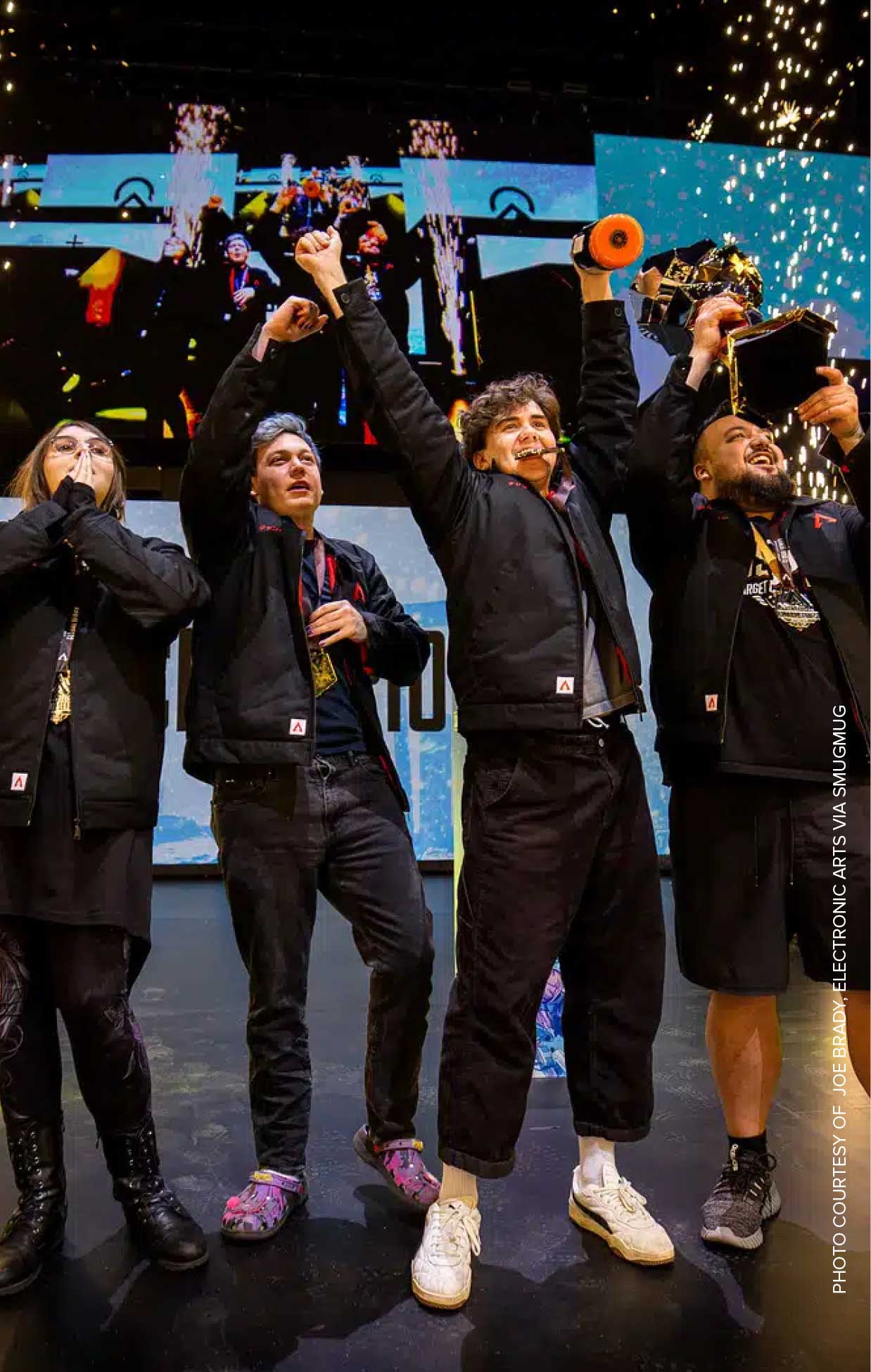 The best esports events don’t just draw crowds. They create memories. The ALGS Year 5 Championship in Sapporo created both — on a scale that sets a new standard for what fan-first esports production looks like.
The city-wide integration began before a single match was played. Custom ALGS branding appeared across Sapporo’s airport, train stations, and subway hubs, turning the city itself into a welcome for traveling fans rather than treating the host as a logistical backdrop. At the Daiwa House PREMIST DOME, the onsite experience was built around participation: trading cards distributed through merchandise purchases, with custom artwork and collectible rarities designed to create an economy of shared fandom among strangers.
The musical dimension of the campaign demonstrated the same depth of cultural thinking. The team worked with Japanese hip hop artist OZworld — himself an avid Apex Legends player — to create “STIM UP,” a track built around the in-game sound effects of Octane’s jump pads and stim shots. The result felt native to the game. OZworld performed it live during the Championship Sunday opening ceremony in an Octane-inspired outfit to a sold-out crowd. The Hatsune Miku trophy presentation — in which the iconic Japanese virtual idol presented the championship trophy to thousands of live fans — was the kind of creative localization decision that requires genuine cultural knowledge to execute well.
Over four days, 38,000 fans attended. The campaign reached across five countries — the United States, United Kingdom, Germany, Japan, and Saudi Arabia — each with a localized approach that reflected the cultural specifics of that market rather than simply translating a single global asset.
Jasmine, Global Brand Marketing Lead for Apex Legends Esports, was recognized as a Cynopsis Top Woman in Media for her leadership on the campaign. The deeper recognition is this: she built something that 38,000 people showed up for, and many of them will remember it for a long time.
Fashion Week Energy, Esports DNA, and a Collection That Sold Out in 24 Hours
Esports Marketing Excellence Award
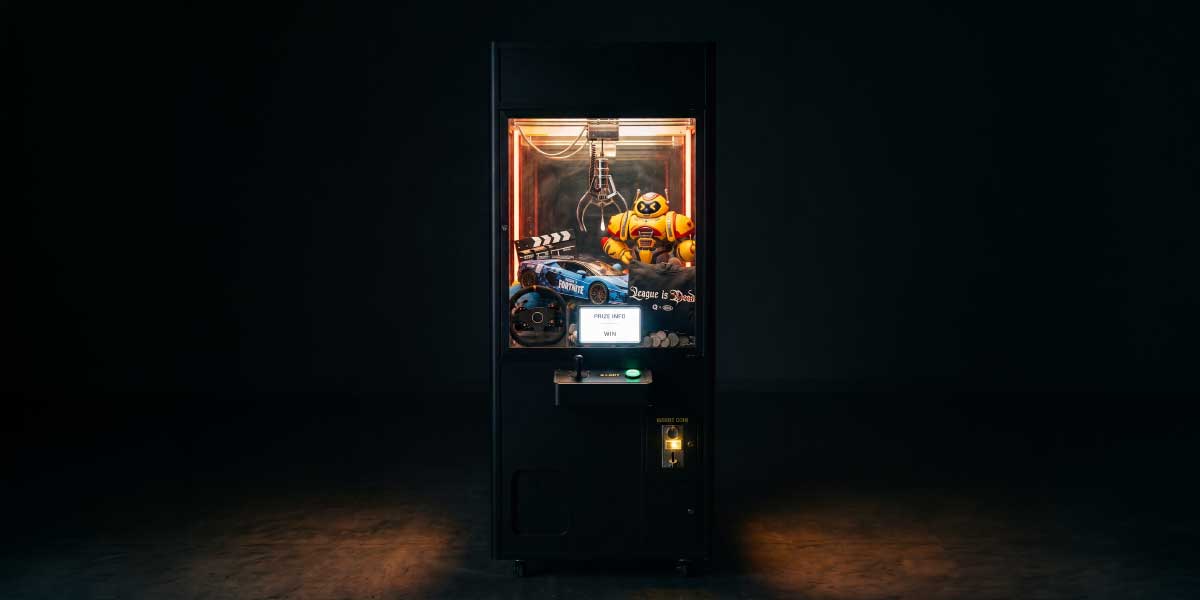
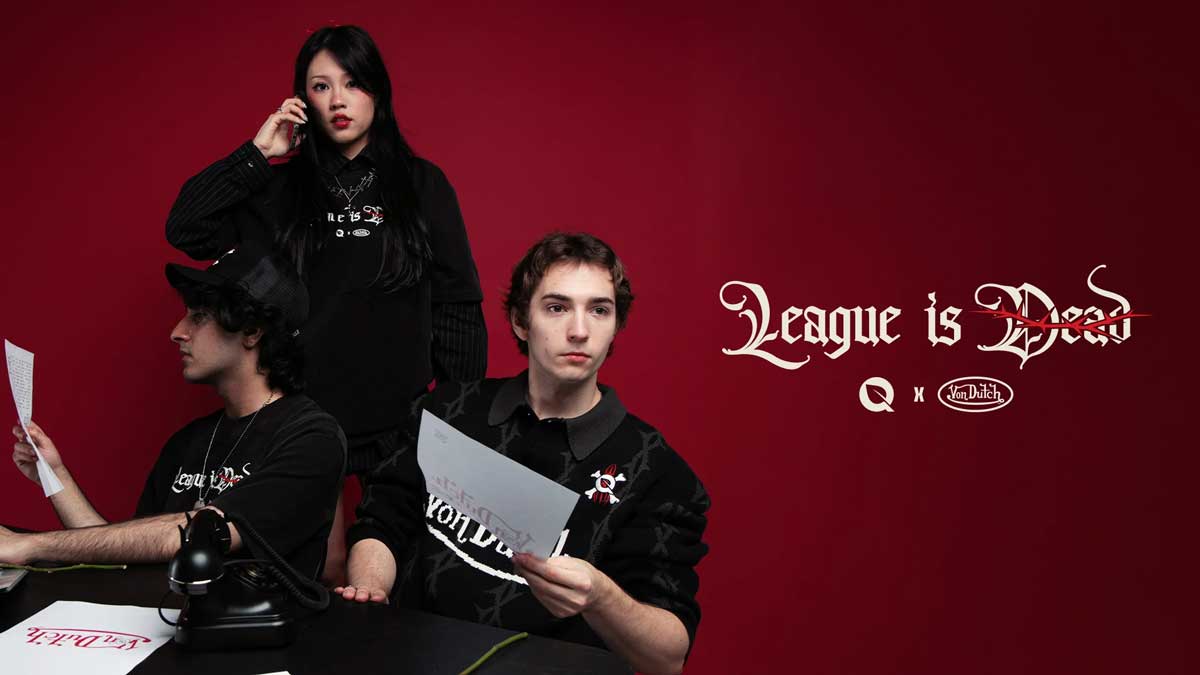 FlyQuest’s “League is Dead” collaboration with Von Dutch wasn’t a marketing campaign. It was a cultural statement — and it landed with a force that had the broader fashion and sports worlds paying attention.
The strategic insight behind “The Funeral” — an invite-only gala at SRGN Studios in Los Angeles — was sharp and specific. Von Dutch, the definitive Y2K luxury brand, was experiencing its own creative resurrection. FlyQuest saw the parallel clearly: two brands with strong cultural heritage and the ambition to reintroduce themselves on their own terms. The “double rebirth” strategy leaned into that alignment and turned it into the campaign’s engine.
The execution matched the vision. The Funeral was designed to feel like a Fashion Week debut. The guest list included NFL athletes, Olympic gold medalists, and Tier-1 content creators — attending as genuine cultural tastemakers. The creative direction — black roses, veils, custom snakeskin patterns — announced a bold aesthetic departure and a new visual language for esports marketing. The collection sold out in under 24 hours. The campaign generated 205 million impressions and earned featured coverage in Complex. Perhaps most remarkably, athletes and culture figures wore the pieces publicly without compensation — organic adoption that is the highest possible validation of brand authenticity.
FlyQuest, led by Paul Cho, has demonstrated that an esports organization can generate demand through cultural cachet rather than relying exclusively on traditional sponsorship revenue. That proof of concept matters far beyond this single campaign. It points toward a commercial model that the entire industry is watching closely.
The Degree Program That Didn’t Exist Three Years Ago Is Already Changing Higher Education
Esports Scholastic Impact Award
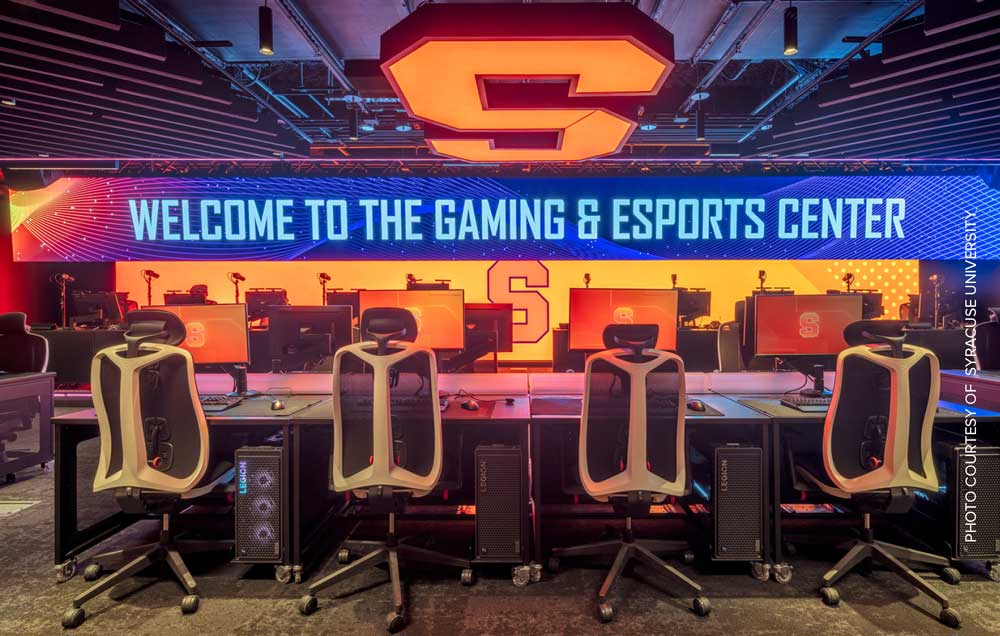 When Joey Gawrysiak arrived at Syracuse University in Fall 2023, he brought with him the experience of building one of the country’s first esports degree programs — at Shenandoah University in Virginia, where it earned the 2023 CSMG award for Esports Program Impact of the Year. At Syracuse, positioned at the intersection of the S.I. Newhouse School of Public Communications and the David B. Falk College of Sport and Human Dynamics, he had the platform to go further.
What he and the university have built in less than three years is unlike anything else in collegiate esports.
The B.S. in Esports Communications and Management offers three specialized pathways: Esports Business and Management, covering finance, sponsorships, venue management, and analytics; Esports Communications, covering public relations, content creation, and event production; and Esports Media and Design, covering game aesthetics, digital marketing, and visual storytelling. The program enrolled nine students in its first year. By Fall 2025, enrollment exceeded 50 — well beyond initial projections — and applications to esports-related academic tracks have increased by more than 400% since launch.
The infrastructure behind the program is serious. The Gaming and Esports Center at the Schine Student Center opened in January 2025, housing competitive varsity teams on a professional-grade competition stage. The Barnes Center gaming room logs over 22,800 annual visits. The flagship — a 20,000-square-foot esports headquarters at the Marley Building featuring a 150+ seat competition auditorium, professional broadcast studios, and team training rooms — positions Syracuse among the most invested institutions in esports infrastructure in the country.
Students don’t just attend the program. They work in it. Over 50 paid employment opportunities in event management, broadcast production, content creation, and social media give students professional experience before graduation. The program produces over 56 hours of live esports content per month — a figure that rivals dedicated production companies.
The move that elevates Syracuse’s model from excellent to visionary is its role as the home of the Empire State Scholastic Esports Federation championships — hosting New York State’s largest high school esports competition twice in 2025. For a high school student from Silver Creek or Bethlehem competing on a professional stage at a Power 4 university, the experience opens a door that many didn’t know existed. That is the pipeline — and it is the reason schools like Ohio State, Baylor, and Michigan are paying close attention.
Five Winners. One Shared Vision.
Look across this year’s ESTA class and a clear philosophy emerges. GameSquare chose profitability over scale. Brandon Tschacher chose community over capital. The ALGS team chose cultural depth over impressions. FlyQuest chose authenticity over reach. Syracuse chose pipeline over prestige.
Each of these organizations and individuals made a deliberate decision to build something that lasts — and each of them has something extraordinary to show for it. The 2026 ESTA Esports Industry Awards are a celebration of that commitment, and a preview of where the industry is headed.