When BLAST brought the world’s biggest Counter-Strike event to Austin, it didn’t just sell out an arena — it quietly rewired how city officials, tourism boards, and economic planners think about a new category of mega-event. Now Fort Worth is next. But can lightning strike twice?
On the morning of June 23, 2025, the city of Austin was doing the math. The Grand Finals of the BLAST.tv Austin Major had wrapped the night before at a packed Moody Center. The crowds were gone, the tournament screens dark. What the city was left with wasn’t a hangover — it was a windfall.
Independent economic analysts at Angelou Economics had been tracking the event’s footprint for weeks. Their final number: $102 million in total economic impact. For a city hosting its first major esports event, it was a figure that stopped people mid-sentence.
“To deliver $102 million in economic impact with our first major esports event is an incredible feat,” said Tom Noonan, President & CEO of Visit Austin. “Welcoming 30,248 out-of-state attendees from all 50 states and 37 countries confirms Austin’s status as a top global destination.”
For James Woollard, VP of Destinations & Market Development at BLAST, the number was as much a validation as a revelation. “The headline number of more than $102 million in total economic impact is obviously a huge statement, especially for a city’s first major esports event,” he says. “What stands out most is that this was not a marginal impact — it was measured as one of the most impactful esports events ever hosted in North America, and up there with the most impactful sports events in town during a ‘need period.’”
What the report confirmed, Woollard says, is something BLAST had believed for a long time. “If you combine the right title, the right format, and the right event experience in a city, esports audiences will travel, stay, spend, and create meaningful economic return. Austin proved that at scale.”
That result didn’t materialize from thin air. It was the product of a meticulous event model — one that BLAST has been refining for years and is now preparing to replicate in Fort Worth.
Not Just Another Tournament
To understand what happened in Austin, you have to understand what BLAST actually is. The Copenhagen-based company is the world’s leading competitive entertainment company, producing and owning some of the most-watched competitive gaming events on the planet. What distinguishes BLAST from the crowded field of esports organizers isn’t just production quality — it’s the company’s insistence on treating its events with the same strategic seriousness as a Formula 1 Grand Prix or a major tennis championship.
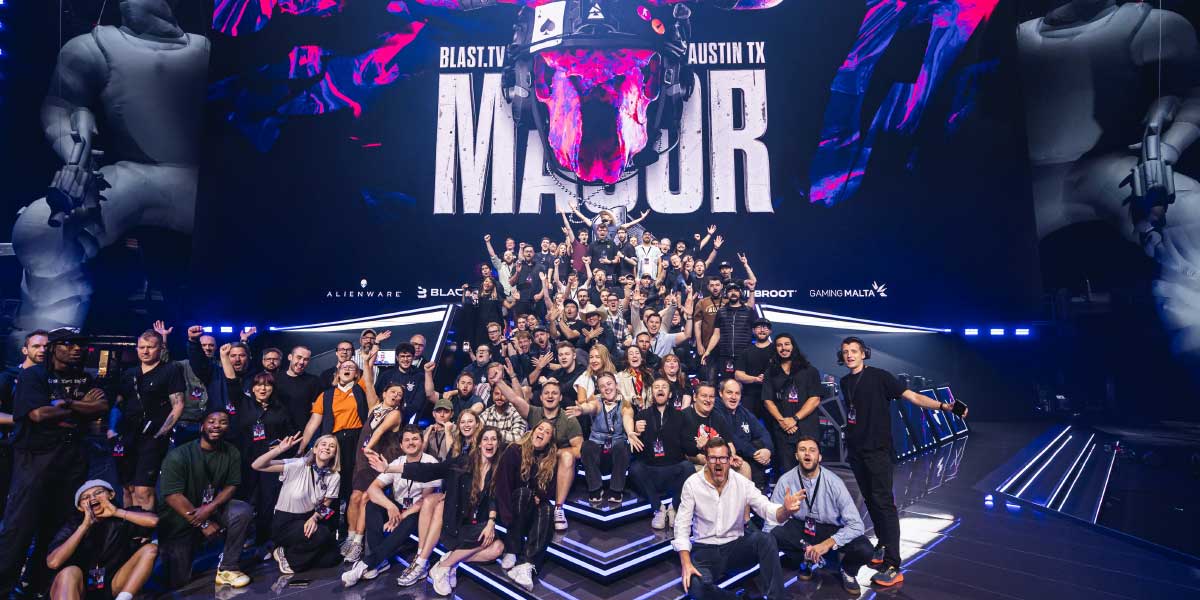
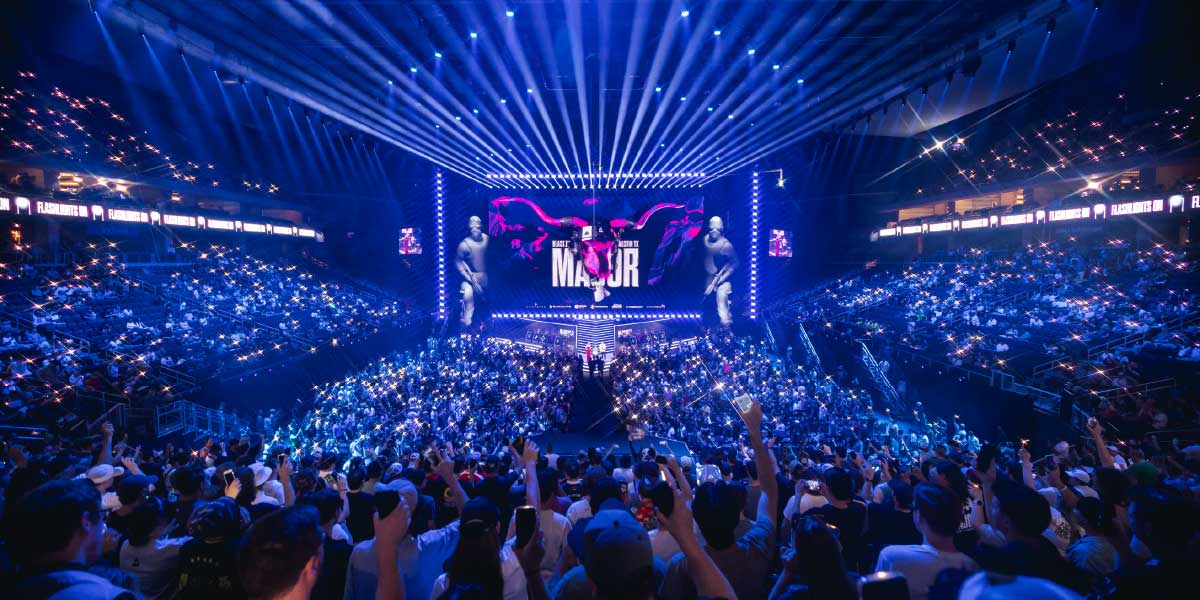
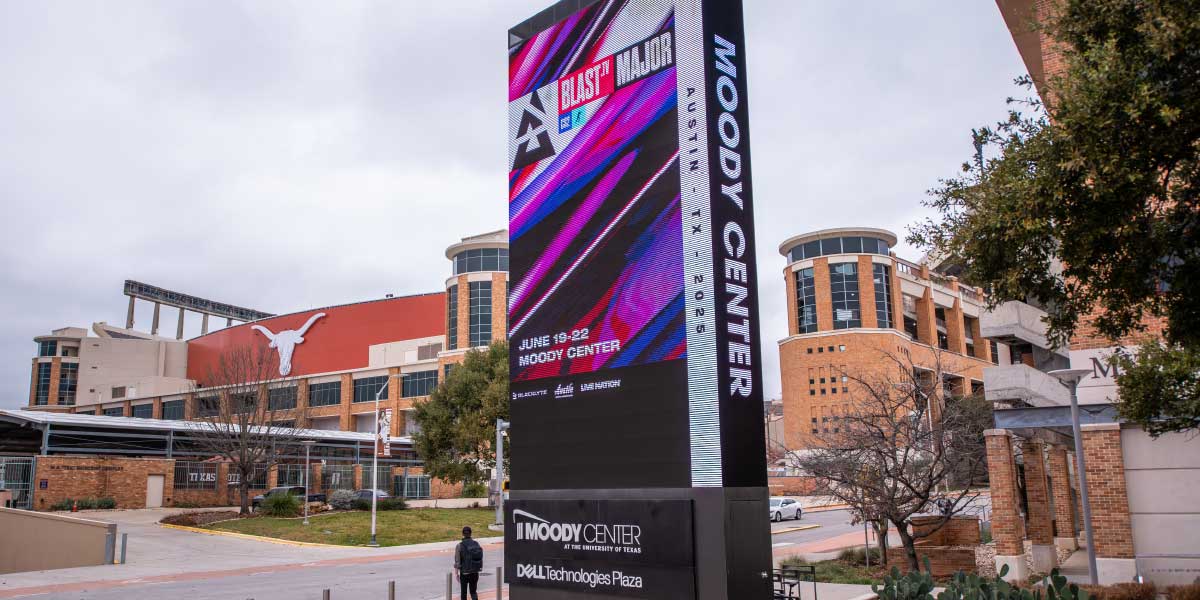
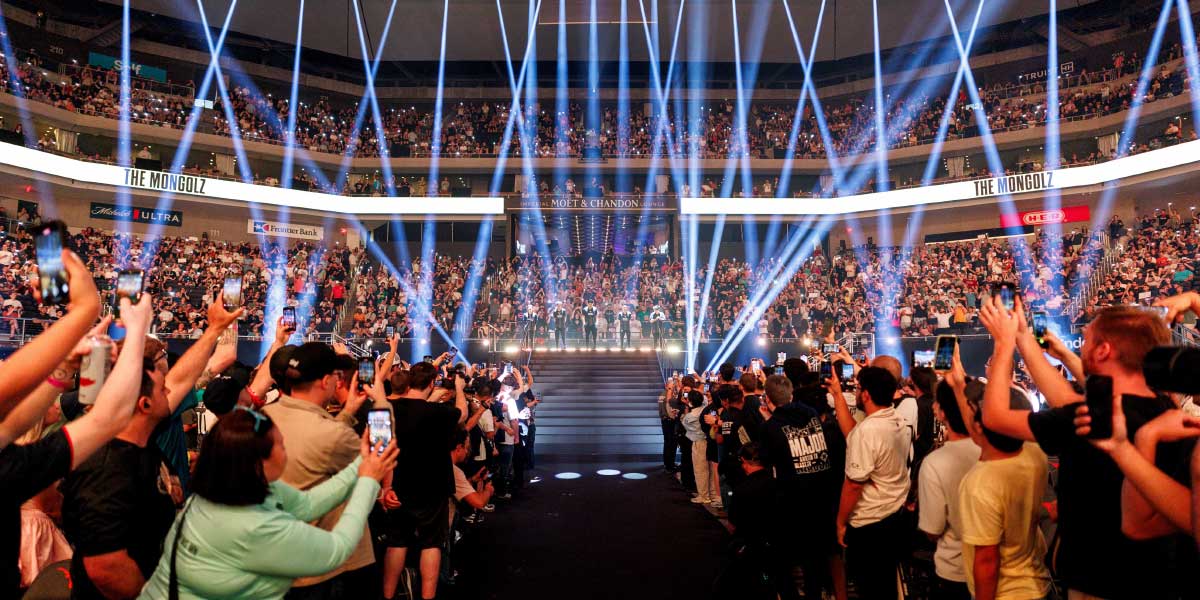
The BLAST.tv Austin Major ran from June 3 to June 22, 2025, with the final four days held at the Moody Center. Thirty-two of the world’s top Counter-Strike teams competed for a $1.25 million prize pool in front of more than 40,000 fans in person, while millions more watched across 105+ territories in more than 30 languages. On Grand Finals Sunday, peak viewership hit 1,789,038 concurrent viewers — a record that eclipsed the 2023 Paris Major. Total content consumption clocked in at 76,107,382 hours watched and 237,737,392 total views.
“At a time when parts of the wider esports industry have faced challenges, live events continue to thrive when they are built around the right fundamentals: world-class competition, strong fan demand, premium production, real partnerships and meaningful commercial and host-city value,” Woollard says. “That is the model BLAST has focused on consistently, and Austin showed exactly why it works.”
The Audience Nobody Saw Coming
Here’s what made Austin’s economic planners do a double-take: 65% of attendees came from outside Texas. All 50 U.S. states were represented. So were 37 countries. That’s 30,248 out-of-state visitors descending on Austin’s hotels, restaurants, and bars — for a video game tournament.
Traditional sports events rarely generate that kind of geographic draw outside of championship events. The Super Bowl does it. The NCAA Final Four does it. A regular-season game does not. A Counter-Strike Major, it turns out, does.
“The Counter-Strike audience is one of the most established and globally connected fanbases in esports,” Woollard explains. “Majors are landmark moments in the Counter-Strike calendar. They have prestige, scarcity, and history. Fans do not see them as just another event — they see them as global occasions worth travelling for. That level of loyalty and international pull is exactly what makes Counter-Strike such a powerful title for host cities.”
That travel behavior translates directly into economic output in ways that convention bureaus are only beginning to quantify. The Austin Major didn’t just fill Moody Center — it filled the city.
$46 Million in Media Value. 37 Billion Impressions. What That Actually Means.
The economic impact number tells one story. The media numbers tell another.
The Austin Major generated $46 million in media value for commercial partners and 37 billion brand impressions across the event. That’s not a local marketing buy. That’s global reach generated by a combination of live broadcast, streaming, social content, media coverage, and the relentless fan engagement that surrounds a Counter-Strike Major.
“For cities, that matters because hosting is not just about ticket sales or hotel nights,” Woollard says. “It is also about global visibility, destination branding, and being part of a cultural moment that reaches far beyond the local market.”
This reframes the entire value proposition for economic development officials. The question isn’t just how many hotel rooms were sold. It’s how many billions of impressions put Austin on screens worldwide. In June 2025, the answer was a lot.
How a City Wins a BLAST Event
None of this happened by accident — and it didn’t happen because Austin simply raised its hand. Winning a BLAST event requires meeting a specific set of criteria that the company evaluates methodically before any deal is signed.
“When we look at host cities, we are looking for a combination of venue infrastructure, great local and national audiences, accessibility, strong local partners, and a city that sees the value of esports as more than a one-off event,” Woollard explains. “Austin stood out because it offered all of that.”
The non-negotiables, he says, go beyond bricks and mortar. “The city needs the right arena, physical space and operational capability — but just as importantly it needs partners who want to maximize the fan experience, reach and the broader destination impact.” It’s a checklist that filters out cities looking for a novelty act and identifies the ones ready to build something lasting.
The Partnership That Made It Work
Austin cleared that bar by assembling a partnership structure that brought together C3 Presents, and the Austin Sports Commission — a combination that doesn’t exist anywhere in the traditional sports event playbook.
“What made Austin work was the combination of complementary strengths,” Woollard says. “C3 Presents brought deep expertise in local event promotion, marketing and ticket sales. The Austin Sports Commission brought a local destination perspective, helping connect the event to the city’s broader economic objectives and various stakeholders — including securing the Mayor of Austin, Kirk Watson, to take part in a launch event hosted exclusively at Moody Center.”
The Mayor’s involvement wasn’t ceremonial. It signaled that Austin’s civic leadership had decided to treat this event the way it would treat a major professional sports championship. That alignment — between esports infrastructure and civic ambition — is what Woollard identifies as the real non-negotiable in any host city conversation.
Texas back at the epicentre of global gaming and esports
Austin is a city with built-in cultural velocity — music, technology, SXSW, a young professional population primed for exactly this kind of event. Fort Worth is a different kind of city. Which is precisely why what happens there in April matters so much to the broader thesis.
BLAST Premier Rivals 2026 comes to Dickies Arena from April 27 to May 3, with the final three days played in front of a live audience competing for $1 million. The question hanging over the whole thing is whether the Austin model was a perfect-conditions anomaly or a genuinely repeatable blueprint.
Woollard doesn’t hedge. “The bigger takeaway is not that this only works in Austin. It is that the underlying ingredients are replicable: a globally relevant game title, strong local partners, the right venue infrastructure, and a strategy to attract travelling fans.” He notes that BLAST isn’t walking into Fort Worth cold — the company has already hosted Fortnite and Rocket League events there. “That approach does not need to be copied line for line. What matters is applying the same principles in a way that fits the identity, local community and ambitions of that city.”
Success in Fort Worth, Woollard says, will be measured the same way it was in Austin: fan turnout, the mix of domestic and international visitors, partner value, and broader impact around the event. “Austin set a very high bar, and Fort Worth gives us the opportunity to test how repeatable that success can be with the right structure in place.”
The Message for Every City That Hasn’t Called Yet
For economic development leaders, Woollard has a message that is notable for its lack of evangelism. He’s not asking for belief. He’s presenting a case file.
“Austin showed what is possible: over $102 million in total economic impact, 30,248 out-of-state attendees, fans from all 50 states and 37 countries, and global reach across 105+ territories in more than 30 languages,” he says. “That is not a theoretical upside — that is a measurable return. The opportunity now is for more cities to think strategically about how they can use esports to drive tourism, profile, and long-term positioning.”
The distinction matters. The esports industry has spent years asking cities to imagine what might be possible. BLAST is now showing them what already happened — with receipts from an independent economist — and asking why more cities aren’t already in line.
“This is not about buying into industry hype,” Woollard says. “It is about investing in a proven event model that already delivers measurable outcomes.”
The Long Game
Ten years out, Woollard sees something bigger than individual events — he sees a structural shift in how American cities think about esports entirely.
“Cities will increasingly see esports not as a niche category, but as a global entertainment platform capable of driving tourism, media exposure, and economic impact at scale,” he says. “In most cases, the model will continue to make smart use of existing infrastructure — as we did with Moody Center in Austin and now Dickies Arena in Fort Worth. The bigger shift will be in mindset.”
That mindset shift, if it comes at scale, will trace its origins to a three-week Counter-Strike tournament in the summer of 2025. A tournament that drew fans from 37 countries. That generated 37 billion brand impressions. That put $102 million into a local economy that had never hosted a Major before.
The bar has been set. The only question now is who’s ready to clear it.